RACHEL, HORSE BREEDER: WHY HORSE HEALTH RECORDS SELL THE HORSE
“Getting their professional opinion documented is the most challenging part.”
Rachel, horse breeder, around 35 horses
RACHEL, HORSE BREEDER: WHY HORSE HEALTH RECORDS SELL THE HORSE
“Getting their professional opinion documented is the most challenging part.”
Rachel, horse breeder, around 35 horses
Rachel breeds and sells horses alongside her mother, with around 35 on the property at any time.
When the farrier leaves, the advice leaves too
Her farrier comes every eight to ten weeks, a little less often in winter. He talks her through everything he does, and then the conversation ends there. Nothing is written down. When he comes back for the next trim, she says, he is not always sure what he did the last time. Their osteopath keeps notes in his phone and only shares a report if she asks for one.
What a spreadsheet can't hold
She keeps spreadsheets for vaccinations and worming, and her mother tracks the chiropractor visits. What a spreadsheet cannot hold is the detail: what was wrong, what was addressed, what a trainer worked on. With 35 horses, she says, it all starts to blur together.
Why buyers choose the documented horse
It matters most when a horse is sold. Rachel's family sells to find the right home rather than the best price, so they want the buyer to know everything there is to know. But a written history covering a horse's health, training and performance is rare. Given the choice between a documented horse and an undocumented one, she says, a buyer takes the documented one every time.
Her idea: speak it straight into the app
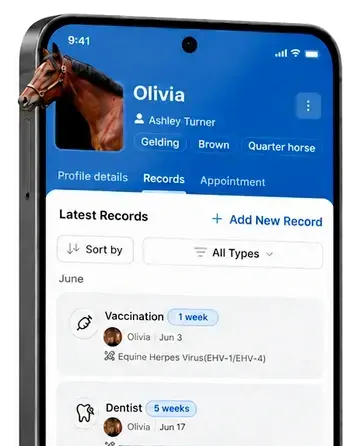
Her own idea for making it work: the farrier or vet already explains what they are doing out loud during the appointment, so let them speak it straight into the app.
“
They love their horse, they want to take care of their horse, they want to make sure they're doing the best that they can for their horse.
What's missing from most horse records
-
01. The advice is spoken, never written
Farriers, vets and bodyworkers explain their work at the appointment. Almost none of it survives as a record the owner can go back to. -
02. A spreadsheet is not a history
Dates and vaccinations are easy to log. What was wrong, what was done and why is the part that gets lost. -
03. Documentation sells the horse
A full health, training and performance history is rare, and buyers choose the horse that has one.
Part of the EQUINET horse owner interview series. New conversations published every month.
Read next: Jean, pleasure rider: the things nobody writes down
More horse owner interviews
Get started with EQUINET today
Free download for iOS and Android. One account across every device.